Read an interesting article by David Gardner from The Motley Fools: "The Highest Possible Returns. Period." He is one of those investors that like to go after high growth companies. For those who like young and exciting companies, he is one to refer to. Below are an excerpt from the article about his experience of coming across the then so-called-overvalued AOL (America Online):
"In 1992, I was 26 and already spending my fair share of time online. For several years, I'd been a satisfied customer of America Online. Although I liked the service, I decided not to buy shares of the company at the initial public offering that year. I thought I'd wait a while. Idiot.
I kicked myself for two years while the stock quadrupled (means, up by 4 times). In the spring of '94, I followed my instincts and became an AOL shareholder -- in spite of an article in a major financial publication that declared AOL grossly overvalued and predicted that the stock would decline by 35%. (these sort of pessimism sound familiar?)
The following year, the stock dropped 25% or more three times. (oh wow!! it did fall!!) And then in 1996, shares absorbed a drop of 65%! (oh my God! jump ship! jump ship! cut lose! cut lose!) Despite these setbacks, the company went on to wreak havoc on the business and journalistic establishments en route to putting up some of the best returns available during a decade of great investment returns. Even with all of the temporary downturns, and even though the stock is today down from its all-time high, my initial investment has still increased about 37 times overall -- $10,000 in stock at that time would now be worth $372,156, which amounts to an annualized return of 31%." (er...)
Seriously, we might have heard of these kind of stories many times. Some examples from our own soil include Public Bank, IOI Corp, Genting and etc, have all gone through those kind of growth phase and returned as much. Congratulations to those who have hold on to them for such long time! I personally knew a few who does. Who said investing for long term is boring? I have some painful experiences myself (I kicked myself too hard!). Some close friends of mine can proved that I am not lying. One example is when Parkson was listed in China 2 years back. I remember the IPO price was around HK9 something, when I-Capital started to recommend this stock. Although actual feedbacks from friends in China are that the Parkson Stores there are doing very well, I hesitated because I thought the price is slightly high. So I bought the holding company Lion Diversified instead (Thank you, I-Captial!) Well then, fast forward to today, how much do you think Parkson Retail is selling? Reminder, HK9 just 2 years ago. As at last friday, it hit an intraday high of HK85! (Although the mother did almost as well, I swear I have sold all my holdings earlier. So, I haven't made all the gains myself. Told you who did. I-Capital! They are still holding big chunks of its shares.)
Anyway, back to the article, David Gardner did point out 6 signs of identifying these sort of Rule Breakers (as he called these high growth market leaders):
1) Top dog and first mover in an important, emerging industry.
2) Sustainable advantage gained through business momentum, patent protection, visionary leadership, or inept competitors.
3) Strong past price appreciation.
4) Good management and smart backing.
5) Strong consumer appeal.
6) You must find documented proof that it is overvalued according to the financial media.
More details discussion on these 6 signs later.
Saturday, October 27, 2007

Sunday, October 21, 2007
The Black Monday Deja Vu
The Dow Jones stumbled by 366 points or around 2.6% on last Friday, 19th October. People tried to find the causes and among them: concerns on crude oil prices at all time high, which in turn will eat into corporate profits for the months to come; concerns on the aftermath of the Sub-prime melt-down and its impact that can pull down earnings of big financial institutions; super high inflation and etc. (Remember when I said human fear of the unknown? People have to find excuses to get rid of that fear). But what I find most interesting is the saying that it was the effect of the 20th Anniversary of the Black Monday that happened on the 19th October 1987. Some history: on that day, the Dow Jones was down by 22.61% in a single day, wiping USD 500 Billion off the market back then. How big is 500 Billion? To give a simple comparison, as at last count on end June 07, the Bursa Malaysia has a total market capitalisation of USD387 billion (should be higher by now), that means, the USD500 Billion lost during that Black Monday alone could have bought up ALL the listed company on Bursa Malaysia today, with a fat 20+% premium. Mind you, that was way back when the Dow Jones was still at 1739 points (compared to around 14,000 points today), which means those super huge corporations like Exxon Mobil, Citibank, McDonalds and etc were still at their teenage years. Today, Exxon Mobil alone have a market capitalization of over USD 500 Billion. Sorry, got swayed off topic. This post isn't suppose to whine about how tiny our market is. Anyway, that Black Monday was the single largest decline in the history of the American stock market in percentage term.

So, what's the implication of all these histories? Would you noticed all those major events or market crashes (except for the last one) if I didn't point them out? I doubt so. Why? because they are so insignificant. When we look back into history, these setbacks are like nothing. The market will continue to grow, people will learn new ways to do business more efficiently and more profitably (like using computer and internet), and find new ways to solve problems (like using Biodiesel to substitute oil) and etc. Most importantly, good companies will continue to grow and bring more profits to shareholders, in turn, increasing their market value. Remember when I mentioned above that the total market value lost during the biggest one day stock market crash in history is only equivalent to the market value of one Exxon Mobil today? That's the nature of human beings. We grow. We evolve.
So, what caused the Black Monday back then? There were a few potential causes, among them: overvaluation, illiquidity and market psychology. Sounds familiar? Yup, we tend to hear these terms almost every other day for the last few months now. Anything new? well, the credits should go to the market commentators and economy experts for their creativity. They start to think of something new like the oil crisis, carry trade, trade deficits, external debts, weakening of the Dollars and etc as excuses. These have already been there for like many months now, what happened since then? The market continues to rise into unseen territory. And today, you see the Black Monday thingy. *applause*
Anyway, I didn't say that the market will not Correct or the year-long Bull-Market-party won't end. It will, sooner or later. It's the economical cycle we all have to go through every few years. So? do we go out and sell everything we have? Before that, please have a look at the following graph:
So, what's the implication of all these histories? Would you noticed all those major events or market crashes (except for the last one) if I didn't point them out? I doubt so. Why? because they are so insignificant. When we look back into history, these setbacks are like nothing. The market will continue to grow, people will learn new ways to do business more efficiently and more profitably (like using computer and internet), and find new ways to solve problems (like using Biodiesel to substitute oil) and etc. Most importantly, good companies will continue to grow and bring more profits to shareholders, in turn, increasing their market value. Remember when I mentioned above that the total market value lost during the biggest one day stock market crash in history is only equivalent to the market value of one Exxon Mobil today? That's the nature of human beings. We grow. We evolve.
So, does it matters if we see another Black Monday or Bloody Red Tuesday next week? Yes, of course. You might want to see if there are bargain discounts. By the way, I haven't mentioned that the largest one day percentage gain of the Dow Jones, actually happened just 2 days after the Black Monday, have I? Don't worry about the market crash. We can't predict them anyway.
Conclusions. I know I have mentioned this far too many times, oh well, no harm mentioning it again then. There are only 2 important things that matters when it comes to long term value investing: THE RIGHT COMPANY TO BUY and THE RIGHT PRICE TO PAY.
Thursday, October 11, 2007
You've got to find what you love - Steve Jobs
Below is a link to the commencement speech given by Steve Jobs 2 years back in Stanford. Steve Jobs is the CEO of Apple Computer, founder of Pixar Animation Studio and is currently on the Board of a few big listed companies in the US. He is worth around USD5.5 billion as of this writing. Many of you might have heard it or even read it, but I am posting here again for those who haven't and for my future reference. It is a wonderful piece of speech and should be read by those who are hesitating with what to do with their life now. Really, it will be a 10 minutes very well spent:
http://news-service.stanford.edu/news/2005/june15/jobs-061505.html
http://news-service.stanford.edu/news/2005/june15/jobs-061505.html
Wednesday, October 10, 2007
Mistake 3 - The most unlucky stock picker
Ever had any of the following experiences?
Found a stock that meet all the criterias you were looking for, nice valuation, good business prospects and etc.. but, you were not sure when to call your broker to make the Buy order... you waited and waited for the "feeling" to call on you as you watched the stock kept its upward push, slow and steady.. and one fine morning, you suddenly saw one hell of a good news about this particular stock in the newspaper and the projections is that its profit is going to double (for whatever reasons..) in the next financial year (or whatever good news you can imagine).. "oh my god.. this thing is gonna shoot up today.. I am gonna miss the boat!!" you told yourself.. as the market opened, the stock suddenly gaped up for like 5% and it never look back since then.. you can wait no more and you know that you just NEED to call the broker RIGHT AWAY!! ...
"Hey, Tom, buy me 5 lots of SOB Holding Limited, whatever price it is selling, quick quick, don't let it runs away.." (you might even called the wrong name, whatever, who cares!!) all you know is that you need to buy that SOB or else you will be kicking yourself if it hits limit up.. as you waited for ages to get the order confirmation from your broker, your mind were thinking, "what the hell!! does he even know how to use a computer? My grandma could have keyed in the order faster than he does! if he don't get it done in the next minute, I swear I am going to change a remisier"... "bloody hell, is he done yet?"... "ok, Done!!" as Tom (or Harry, whatever) confirmed the execution of the order, you heaved s sigh of relief *phew*, "oh yeah! I am on the boat now.. c'mon, let's ride, show papa what you can do"..
eh? suddenly, you saw the buying discontinued, and all the sell orders started to pile up.. 1 cents lower, 2 cents lower.. 5 cents lower.. and as the buy orders disappeared, the fall started to gather momentum.. 10 cents lower, 15 cents, and in just a few minutes, 20 cents off the peak which you've just bought.. "what the hell?".. and without long, it was back to where it closed yesterday, and stayed there for the whole day.. you were shocked, you were disappointed.. but yet, things didn't improve over the next few days.. 1 cent up, 2 cents down, 3 cents up, 4 cents down.. as it went side-ways for the next few weeks, you suddenly let your anger took control of you and you've decided to cut loses and sold it off at whatever price it was.. you thought that's the end of the story eh? heh.. the nice part had just begun.. the stock started to climb... (I leave the rest for your imagination..)
Does this all or any part of it sounds familiar? And you thought that you are the most unlucky stock picker in the world? and you are born to be a loser?
Don't be. Honestly, I have been through that too.. made some hasty decision when my emotions took control of me. I've learnt some painful lessons, luckily I didn't have much capital to invest in back then, or else I would have hurt myself even worse. And, I realised there are many others who have had the similar experiences.
What triggered me to write out this blog? I read something interesting from a book called "Hedgehogging", written by Barton Biggs (finally, something else away from Warren Buffett eh?). The book is about his life being a fund manager, worth your time if you are thinking of becoming one.. Anyway, since you've been reading until here, I don't mind to share with you here.. below is an ad, printed in the "Bawl Street Journal" in 1980 which Biggs had shared in the book, and it goes like this:
PROFIT FROM OUR MISTAKES!!
Investing money is a zero sum game. For every winner, there is a loser. We've been losers! If you had sold what we bought, and if you had bought what we sold, you would be rich!
In 1968, we went heavily into stocks and by 1974, we're down almost 50%! In 1973-1975, we invested over $150 million in real estate, and not just any real estate -- we concentrated in Atlanta; We lost our ass! In 1978, we hired a bright theoretical consultant from Harvard who had a "yield tilt" model which told us that energy stocks were overpriced and auto stocks cheap. This seemed to make sense, so we sold Texas Oil and Gas at $8 and bought General Motors at $60. We lost 33% of our money. If you had gone the other way, you'd be up 430%!
All investors make some bad decisions. But we make a lot -- and with consistency. Now for the first time, you can profit from our mistakes. For $10,000 a year, you can receive copies of the minutes of our quarterly Finance Committee meetings in which we establish our investment philosophy. For an additional $25,000 a year, we will give you a monthly update over the telephone of our current market outlook. And for only $100,000 a year you will receive copies of our trade confirmations so you will know on a daily basis what not to do. It's part of our Contrarian Theory.
This may seem like a very unusual offer, but look at it this way: we can't seem to get on the right side of markets, so if we let you pay to profit from our mistakes, we will have finally found a way to profit from our mistakes as well.
Subscribe now. Time is limited. We are about to undertake a major restructuring of the portfolio, and we'd hate to see you get caught going the SAME way.
- THE FORD FOUNDATION
Feel better? See, I am (or, we are) not alone. Even the professionals and experts did have their bad times. So? should we blame it on luck? or should we just give up investing totally? Well, I have chosen my path long ago. I have chosen to stick to Value Investing. If there are already so many successful investors out there, there must be a way that works! Learn from them! Learn from Mistakes! Have a little Faith and move on!
Sunday, October 07, 2007
Mistake 2: The Wrong Management Team
(With addendum in red)
One of the costly mistakes I have made during my not-so-long investing career is to entrust my hard earned money onto companies with not-so-good management team.
There are numerous examples that happened on our own soil here in Malaysia recently that proved that I am not the only one that have to learn from this mistake. Transmile, Megan Media, Wimems, F-Tec.. just to name a few, have seen their share prices hammered badly due to questionings by SC on suspicions of wrong-doings within the companies. I am pretty sure there are still many similar cases out there, and it's going to be up to us as an investor, to be extra cautious when picking stocks.
But the questions is, how do we know if the company is managed by trustworthy people? Here are some of my humble thoughts:
a) Most importantly, refer to the financial statements and compare them across a few years. Good management should exhibit capability to grow revenue while cutting down costs, widening the profit margin, continually generating high returns on capitals over the years and etc. All in all, making more money for the shareholders. For the sake of this topic, let's just keep to these simple stuff.
b) Another more entertaining way compared to reading those boring numbers is to read the Chairman and MD's statements in the annual reports. Trust me, these statements tell alot about the person in charge. Ever read/heard about the world famous "Letter to Shareholders" written by Warren Buffett himself in the annual report of Berkshire Hathaway? In these letters, Buffett explains the performance of the company for the year, and some major decisions made by himself and some of his thoughts that he wanted to share with his shareholders (or usually referred to as Partners). These letters are treated like Bible by the investment community and there are people who try really hard to study the philosophies and principles of the legendary investor, as well as to find clues about his next move from these letters.
Besides, I especially like to read those statements by Chairman where the companies are in the red. It is usually interesting to see how they tried to cover the holes and give unreasonable excuses to us shareholders (when he thinks that we are suckers). These are usually followed by some very optimistic projections about the future and promising ways to improve the condition. Hmm.. if they already know what need to be done, why haven't they start doing them? Worse, sometimes I feel like they didn't even write those statements themselves..
c) Take a look at the Directors' Salaries and Remuneration package. I prefer those below 5% relative to the Net Profit. You can have your own threshold, depends on your generosity.
d) Read the newspaper and Internet. They might give some clues on what the person in charge is working on at the moment, and sometimes, their characters. I've heard jokes (or real cases, I don't know) where some "people" fly first class to meet their girl friends in London, bought a penthouse for them as "investment in strategic properties" with the companies' fund, buy a multi million dollars paintings as "furniture and fittings" for the office and etc, all in the company's expenses. I didn't say these are all wrong, my point is: Rich people have different hobbies from us ordinary people... Well, some of them might be really beneficial to the shareholders, hell knows. Why bother with these stuff? Mr Buffett once said something like: if the CEO of the company is someone you are comfortable to marry your daughter to, then it is the right business to invest in (well, of course with the assumption you don't hate your daughter). So, don't you want to know a little more about your potential son-in-law?
e) Lastly, this might need you to put in some effort to master the skill. Ever heard of a type of Asian fortune telling skill called "Face reading"? This is defined in Wikipedia as ".. the interpretation of facial features of the nose, eyes, mouth and other criteria within one's face and the conversion of those criteria into predictions for the future... usually covers one phase of the client's life, and reveals the type of luck associated with a certain age range". Once you master the skill, go look at all the pictures/portraits of the directors in the annual reports. Believe it or not, it might even be more accurate and effective than all those other methods mentioned above.
(Seriously, ignore the last one, I am merely writing to make up the numbers)
Addendum on 10/10/07: One big mistake I have made was that I overlooked the impact of management can have on a business/stock. I used to pick "undervalued" stocks by looking only at the numbers in the financial statements and totally ignored the intergrity of the management at the helm. From my experience, there are more homework need to be done. No matter how good the business prospect is; or how dominating it is in its market; or how "cheaply valued" the stock is, as long as you have someone stupid/dishonest/incapable/selfish/greedy (or whatever bad characteristics you can think of) up there, you won't see the stock performing well in long term. Period.
Thursday, October 04, 2007
Arsene Wenger and his investments
I have been a fan of the Arsenal football club since Arsene Wenger took over the helm as its manager. Before him, under George Graham, Arsenal was playing a more defensive game. After Mr Wenger arrived at the club around 10 years ago, he changed their games into faster pace, attacking minded, more direct passing. And in my opinion, they have been playing the most attractive football in the English Premier League since he took over. Until today, Arsenal still holds the longest unbeaten records in the League. Unlike other rich clubs like Manchester United, Chelsea, Liverpool, Real Madrid, Barcelona, Bayern Munich, AC Milan and etc, who prefer to splash out some crazy monies to buy super star players, and in turn, hoping to buy successes and trophies, Mr Wenger prefers to buy young players with potential and develop them into world class players. These players include Thierry Henry, Anelka, Emmanuel Petit, Patrick Vieira, Cesr Fabregas, van Persie and etc. The prices which he paid for them were so much cheaper compared to what they've achieved for the club. (No offence to those fans of other clubs, but please do not argue on the facts above) (For those who do not follow English soccer, and want to start following a team, watch Arsenal!!)
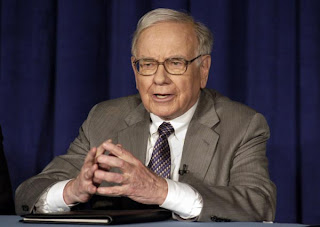
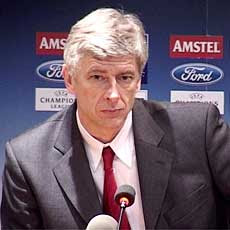



The 3 pictures above shows: Warren Buffett at the top, Arsene Wenger in the middle and Tan Teng Boo (from Icapital, also a very good investor, refer to my other blog at here for more of his details) at the bottom. Sense anything OBVIOUS they share in common?
The answer is after this paragraph. But first, if one were to compare Arsene's success with the other master investors in the world, it's not hard to noticed that he has the eyes for "undervalued assets", like what he saw in those undervalued young players he had bought. Just like any other successful investors, he unearthed raw gems, and wait for them to shine. Those football stars are his successful investments. Just like how Mr Buffett bought Berkshire Hathaway when it was a textile manufacturer who nearly went out of business, and transformed it into one of the largest conglomerates in the world today. And how Mr Tan Teng Boo unearthed Lion Diversified when it was trading below RM1.00 in his I-Capital newsletter. Now, LionD is traded at RM11.00+, within 3~4 years (I was lucky enough to have read his recommendation back then). That's why all three of them earned my full respects!
Answer to their similarities: Of course it's the white hair!! (That's obvious!)
Lastly, please refer to the stock chart below:

It's the stock chart of Arsenal Holding PLC, the holding company of the Arsenal football club, for the last 5 years. See how it soared from 125k Pounds per share to over 1mil Pounds per share? See how a good management can bring good returns to a stock and its investors? There are many other such examples which I would like to share at later dates. Moral of the story: Good investment picks are all around us. And a reminder to those who are not yet a football fans, remember to watch Arsenal this weekend!!
Friday, September 28, 2007
Crisis? What Crisis?
It has been more than 1 month since the Sub-prime crisis broke out. Back then, most if not all of the global markets faced a heavy sell down and many investors rushed for the exits and have been staying on the sidelines. Many things had happened since then: global mutual funds faced liquidation problems, some even stop quoting their redemption prices; banks have to disclose how much they are affected, to calm the nerves of investors and depositors, and of course, further panics and sell downs; the phrase "subprime crisis" has been on the front pages of newspapers almost everyday and many were screaming that the global stock market bubble is going to burst and the world economy is heading into recessions, multi years' recessions; the governments have to take various measures to calm the panics, including bailing out failing banks, pumping liquidity into the market; and most significantly, cutting its discount rates.. all in all, most were preparing for the doomsday and were all gloomy about the stock market back then.. just 1 month ago.. (However, not all things are bad, to fans of Arsenal Football Club, "We are back on top of the Premier League, yes!!")
One month later, today's front page stories? "Asian Stocks, rise to record"; "Hang Seng seeks 7th straight record high"; "Australian shares at fresh record highs"; "Singapore Straits Times Index hits record high"; "Indian Stock market hits record level"; "Dow Jones near all time high" and etc and etc.. I didn't made these up, try Google those indices and all these headlines will pop up in the search results page.. (hmm.. what about KLCI? "Malaysian shares slightly higher on Wall St gain.." er... nothing mentioned about "record highs" like the others.. oh well, at least we are not the only down market")
See how fast the mood swings? Call it funny or ironic, facts are, there are many that are hurt from such wild fluctuations, or at least, miss out on the run up that started few weeks ago. So, where is the market heading? Come to think about it, does it actually matters anymore? There are a few quotes from Mr Buffett himself that I would like to share (well, for my own records too),
"The market is there only as a reference point to see if anybody is offering to do anything foolish. When we invest in stocks, we invest in businesses."
"Charlie (his partner in Berkshire Hathaway) and I never have an opinion on the market because it wouldn't be any good and it might interfere with the opinions we have that are good."
"If we find a company we like, the level of the market will not really impact our decisions. We will decide company by company. We spend essentially no time thinking about macroeconomic factors. In other words, if somebody handed us a prediction by the most revered intellectual on the subject, with figures for unemployment or interest rates, or whatever it might be for the next two years, we would not pay any attention to it. We simply try to focus on businesses that we think we understand and where we like the price and management. If we see anything that relates to what's going to happen in Congress, we don't even read it. We just don't think it's helpful to have a view on these matters."
"For some reasons, people take their cues from price action rather that from values. What doesn't work is when you start doing things that you don't understand or because they worked last week for somebody else. The dumbest reason in the world to buy a stock is because it's going up."
"The future is never clear; you pay a very high price in the stock market for a cheery consensus. Uncertainty actually is the friend of the buyer of long-term values."
He didn't say these yesterday, nor one month back. These are all quoted at least a decade ago. Moral of the story? Do not try to predict the market, nobody will be successful doing that (unless one think that he/she could be smarter than the 2nd richest man on earth). Do your homework and stick to value investing and do what you understand. Believe it or not, that's what the most successful/wealthiest investor of all time has been doing since decades ago.
Monday, September 24, 2007
Tips From the Hong Kong Buffett
I came across a recent interviews made with Hong Kong's Billionaire Lee Shau Kee.
A brief introductions, Lee Shau Kee is the 2nd richest man in Hong Kong (sometimes 3rd, depends on price fluctuations of the shares he is holding. For me, I wouldn't bother of the standings if I have a net worth of USD17Bil!!) and 22nd in the world ranking. He made his fortune through property and share investments. He currently controls one of the biggest property developers and conglomerates in Hong Kong, Henderson Land Development, with interests ranging from town gas, properties, hotels, internet services and etc. He has increased his net worth very significantly since 2006 after betting big on China's stock market. And hence, he was dubbed the "Hong Kong's Buffett" and "Asian Master of Stocks".
Mr Lee was recently interviewed and asked on his views about the future directions of the stock market and tips on investments. Here's the summary of what he said:
Firstly, one should pick the right country to invest. At this juncture, China offers the best opportunity and US the worst. US has too much problems to worry about, including its trade deficits and National debts which are close to USD10 trillion, the interests on such debts alone would have put a heavy burden on its economy.
(side note: the implication of such high debts? that would be another long but interesting discussions. From my point of views, debts might not necessarily mean bad things for the stock market. The national debt of America has been on the rise for the past few years, see where the Dow's heading? Breaking into new highs few times this year alone. Anyway, for the sake of this blog, I am merely translating what Mr Lee said)
Secondly, pick the right industries to invest. He personally recommended insurance, utilities and properties.
Thirdly, pick the right companies. It is recommended to pick the industry leaders, and after these leaders have risen substantially, only then one should switch to other laggards in the same industry. He continue to recommend some industry leaders like China Life (2628-HK), Ping An Insurance(2318-HK), PetroChina (0857-HK), CNOOC (0883-HK), China ShenHua(1088-HK), China Coal(1898-HK), Country Garden (2007-HK), China Oversea (0688-HK) and R&F Properties (2777-HK)
(Side Note: I haven't looked into these companies in details for some time now, the last time I checked, some of them are already very highly priced. I wouldn't be surprised if they are currently selling at 30~50 times PE.)
Fourthly, as the US start lowering its interest rates, USD devalues, dragging a few other currencies along. If one were to invest overseas, this is one factor to be considered carefully. He further pointed out that the Australian Currencies are one of the strongest currencies and offering some good interest returns.
Fifth point is a trading strategy. Buy a stock with good prospect and sell short another with bleak futures, either in another country or industry. It works something like a hedge. As an example, he recommended buying China Life and Ping An Insurance and short selling some American property stocks or Japanese Banking stocks, at the same time. The idea is, you will receive the proceeds from short selling and utilise it on buying those with good prospects. Zero capital (well, excluding some negligible transaction costs), and if you are right, you're gonna gained from both transactions. The downside risk is of course, if both of them go the opposite ways (ie. if the China stocks crashed and the US stocks prosper). However, Mr Lee himself was saying that the chances for this scenario to happen as "highly unlikely".
(side note: most if not all Malaysian trading houses do not provide much flexibility and facilities for such transactions. But such services are very common in Singapore and Hong Kong. However, personally I do not recommend short selling, unless one is very familiar with the risks involved and understand its consequences. I do agree that the global financial market is very wide-opened nowadays and is providing huge investment opportunities. In fact, that's where my personal career is heading into. More about the opportunities and potential of global investing on another blog..)
Just before the interview ended, Mr Lee predicted that the Hang Seng Index will be quiet for the month of October, however it should reach 28,000 points by year end and touch 30,000 points by the Lunar New Year (around February) next year
(side note: as of this writing, Hang Seng broke through 26,000 point. It had rebounded nicely from its 20,000+ points low when the Subprime crisis broke out. The Shanghai Index had also almost doubled since beginning of the year. Scarry eh?)
(side note for reading pleasure: Mr Lee Shau Kee had spent around HK100mil for his son's wedding in Sydney last year and all his staffs who attended the wedding received a HK10k spending money. I believe this spending pattern is something the original Buffett won't be doing even with a knife pointed at his throat.)
(HKD1 = USD0 .128560).
Wednesday, September 12, 2007
New Blog
Dear Readers,
I have started a new blog called "Searching for Values" at http://www.search4values.blogspot.com/. My intention is to share my views on some interesting companies that I have found. Please drop by occassionally for update.
Cheers.
I have started a new blog called "Searching for Values" at http://www.search4values.blogspot.com/. My intention is to share my views on some interesting companies that I have found. Please drop by occassionally for update.
Cheers.
Monday, September 10, 2007
This is my story - The beginning of a new chapter
(This blog has nothing to do with investment. It's just another piece of My Story.)
It has been a week since I quit my job. The destination is still very far away, but hell, I am one step closer to it by any counts. I wanted to write down the feelings I have right now because it is something I don't have for some time, and I am sure, I won't be having it again anytime soon. Most people are shocked by my decision to quit my confortable job. It is a job any employee would have hoped for. A fat paycheque (compared to other employees with my kind of experience and qualification, and trust me, most people will live quite well with such pay, and the nice part is, the annual salary increments have been quite satisfactory over the years), nice superior (he is a very nice guy, to be honest, except for some bad temper, occassionally), very nice colleagues who support me in many ways, very relax schedule (very "flexible" working hours), good employee benefits, not much responsibility except to do some very routine "overseeing" and "supervising" jobs in the plant (pretty much like a 30 minutes walk in the morning to greet my fellow colleagues "Good Morning"), and lastly, attending meetings which has usually been taken care of by highly qualified personnel and my job is merely to listen to what they've got to say, not much deicion makings are required. All in all, little input required, but high pay kind of job. So, what the hell am I thinking when I decide to tender my resignation back then? Simple, because there are some other things I need to achieve in my life.
Life is so unpredictable, and you would never know what's going to happen until it happens. And when something terrible actually happens, it's usually too late to say "if I know this would've happened, I would have..." or "Oh God, if I could have another chance, I would have... " worse still, sometimes you might not even get the chances to say these..
So, do what you have to, when you have to. Time and Opportunity are 2 things that never wait. I know, my decision might not have been made at the right time or might not be the RIGHT one after all, but I certainly want to give it a shot and even if I failed, I can look back and tell myself, "I've tried".
Here are 2 nice quotes:
“Why do people persist in a dissatisfying relationship, unwilling either to work toward solutions or end it and move on? It's because they know changing will lead to the unknown, and most people believe that the unknown will be much more painful than what they're already experiencing.” - Anthony Robbins
“It is only through labor and painful effort, by grim energy and resolute courage, that we move on to better things” - Theodore Roosevelt, the 26th President of US
Dear Reader, it's a great pleasure having you reading until this part. I owed you a "Thank You", for listening to my mumblings. One final piece I would like to share in choosing a carear path: Choose a carear that you have great interest and passion in, and you will definitely do it better than the others.
“If there is no passion in your life, then have you really lived? Find your passion, whatever it may be. Become it, and let it become you and you will find great things happen FOR you, TO you and BECAUSE of you.” - T. Alan Armstrong
Subscribe to:
Posts (Atom)

